

WHAT IS CARNOSINE?
Carnosine is a naturally occurring dipeptide — a molecule made from two amino acids — found particularly in skeletal muscle and other tissues in the body.
One of its best-established roles in muscle is helping to buffer changes in acidity during high-intensity activity. This is one reason carnosine has attracted considerable interest in exercise and performance research.
Scientists are also investigating carnosine for a range of other biological properties, including its antioxidant and anti-glycation activity, and its possible relevance to healthy ageing.
CARNOSINE AND AGEING

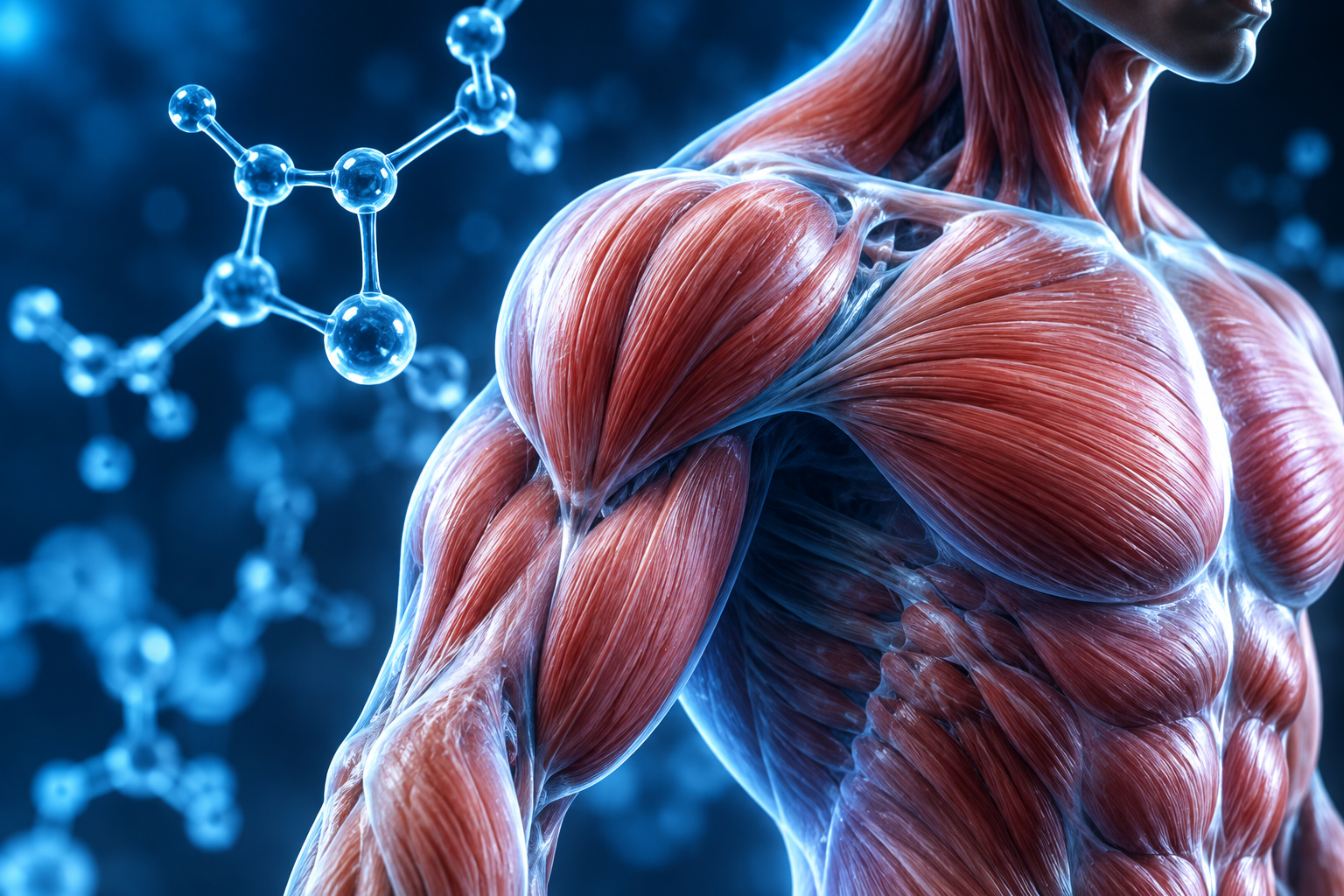
Research suggests that muscle carnosine levels can change with age, although the pattern is more complex than a simple steady decline throughout life.
In one study of healthy people aged 9 to 83, muscle carnosine was around 16% lower in middle-aged adults than in young adults. Interestingly, levels did not fall substantially further between middle age and older age.
Ageing also brings changes in muscle mass, muscle fibre composition and physical performance. This has contributed to growing scientific interest in carnosine and its potential in healthy ageing.
Muscle health becomes increasingly important as we age, particularly for strength, mobility and to remain physically active. Understanding how compounds such as carnosine interact with muscle physiology is therefore an interesting area of ongoing research into exercise, ageing and long-term physical function.
EXERCISE, RECOVERY AND PERFORMANCE
Carnosine is found in particularly high concentrations in skeletal muscle, where one of its best-established roles is helping to buffer changes in acidity during intense muscular activity.
During high-intensity exercise, the working muscles experience changes in their chemical environment that can contribute to fatigue. Higher muscle carnosine concentrations can increase the muscle’s buffering capacity, which is one reason carnosine has attracted considerable attention in sports and exercise research.
Much of the human research in this area has focused on beta-alanine supplementation. Beta-alanine is used by the body to produce carnosine, and supplementation over a period of weeks has been shown to increase carnosine concentrations within skeletal muscle.
Research continues into how carnosine may relate to exercise performance, fatigue and recovery. The evidence is strongest for its role in muscle buffering during high-intensity activity, while some of its other proposed benefits remain active areas of investigation.

FOOD AND SUPPLEMENTATION

Carnosine occurs naturally in animal-based foods, particularly meat, poultry and fish. Because it is concentrated in muscle tissue, these foods are the main dietary sources of carnosine.
Dietary intake can contribute carnosine, but once consumed it is rapidly broken down in the bloodstream by an enzyme called carnosinase. This is one reason much of the supplementation research has focused on beta-alanine rather than carnosine itself.
Beta-alanine is an amino acid that the body uses, together with histidine, to produce carnosine. Research has shown that supplementing with beta-alanine over a period of weeks can increase carnosine concentrations within skeletal muscle.
Diet, supplementation and individual physiology can all influence muscle carnosine levels. Researchers continue to investigate how these factors may affect exercise performance, muscle function and other aspects of health.
TOPICAL DELIVERY: DIPEPTIDE CARNOSINE GEL
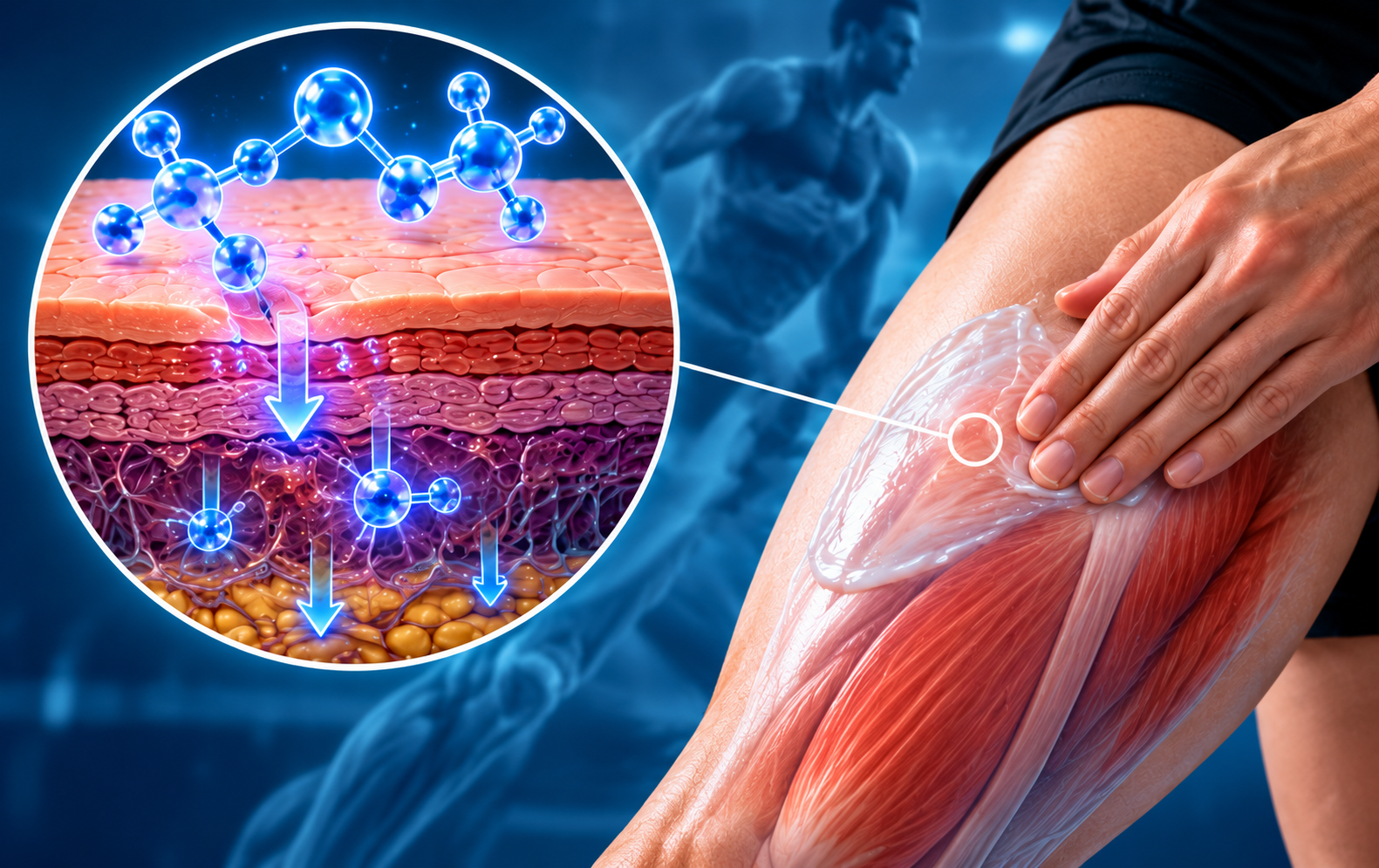
Topical delivery provides another way of applying carnosine, but getting a water-soluble molecule through the skin presents a scientific challenge. The skin’s outermost layer acts as an effective barrier, and carnosine on its own does not readily penetrate it.
Research using human skin outside the body has shown that specially formulated preparations and penetration-enhancing ingredients can substantially increase the amount of carnosine reaching deeper, viable layers of the skin. This means that the formulation used can make an important difference to topical delivery.
More recently, a small study involving seven world-class rugby sevens players investigated a topical carnosine gel applied 40 minutes before high-intensity exercise. Some measures of peak power were higher following the carnosine gel than following a placebo gel, making topical carnosine an interesting area for further research.
MORE THAN JUST MUSCLE
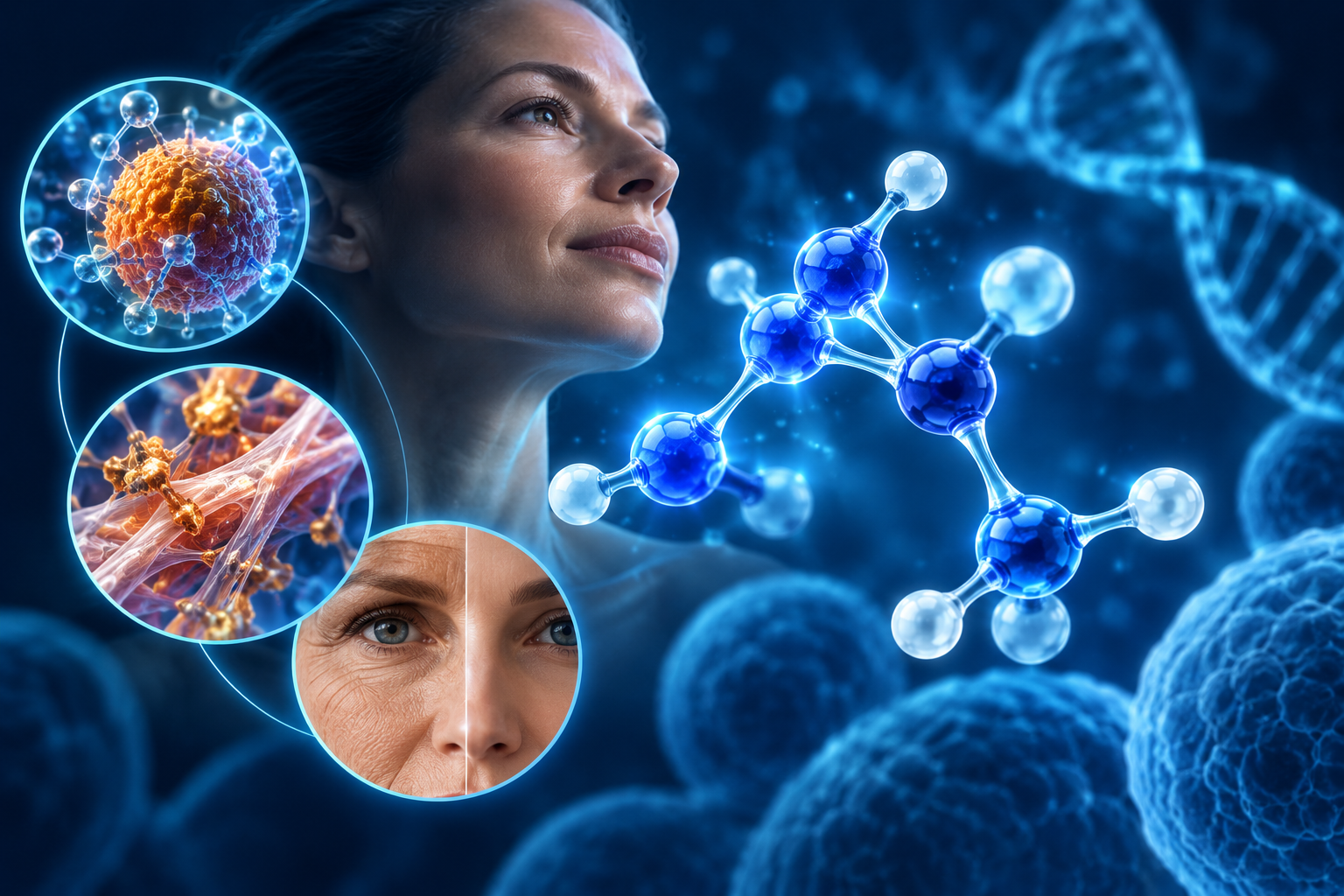
Carnosine is best known for its presence in skeletal muscle, but researchers are also investigating its biological activity in other tissues and its possible relevance to healthy ageing.
One area of interest is carnosine’s antioxidant activity. Laboratory research suggests that carnosine can interact with reactive molecules that may otherwise contribute to oxidative stress and cellular damage.
Carnosine has also attracted attention for its anti-glycation properties. Glycation occurs when sugars react with proteins and other molecules, forming compounds known as advanced glycation end products, or AGEs. The accumulation of AGEs has been associated with ageing and a number of age-related processes.
These properties have made carnosine an interesting subject in longevity research. However, much of this work remains experimental, and research into whether these biological effects translate into meaningful benefits for human health is continuing.
WANT TO LEARN MORE?
If you’d like to learn more about carnosine, longevity, or how I approach health and performance, feel free to get in touch.